Professional silver cleaning


Remove tarnish and dirt while protecting plating, engraving and patina.

When professional cleaning is worthwhile

Good silver cleaning is not simply rubbing until everything shines. The object must first be identified as solid or plated silver, fragile areas assessed and the right amount of patina retained. The choice between gentle cleaning, deeper tarnish removal and a brighter polish is made only after examining the metal, plating thickness, joints and decoration. This allows the surface to be balanced without erasing hand-worked detail or removing more metal than necessary.

How Nissim can help

  • Objects darkened after years in storage
  • Engraved candlesticks and Judaica
  • Silver plate with a thin surface layer
  • Trays, cups and cutlery with stubborn stains

When professional cleaning is worthwhile

Light tarnish on a plain surface can often be handled at home. Professional cleaning is safer for deep tarnish, detailed ornament, silver plate, antiques and sentimental pieces.

A careful, staged process

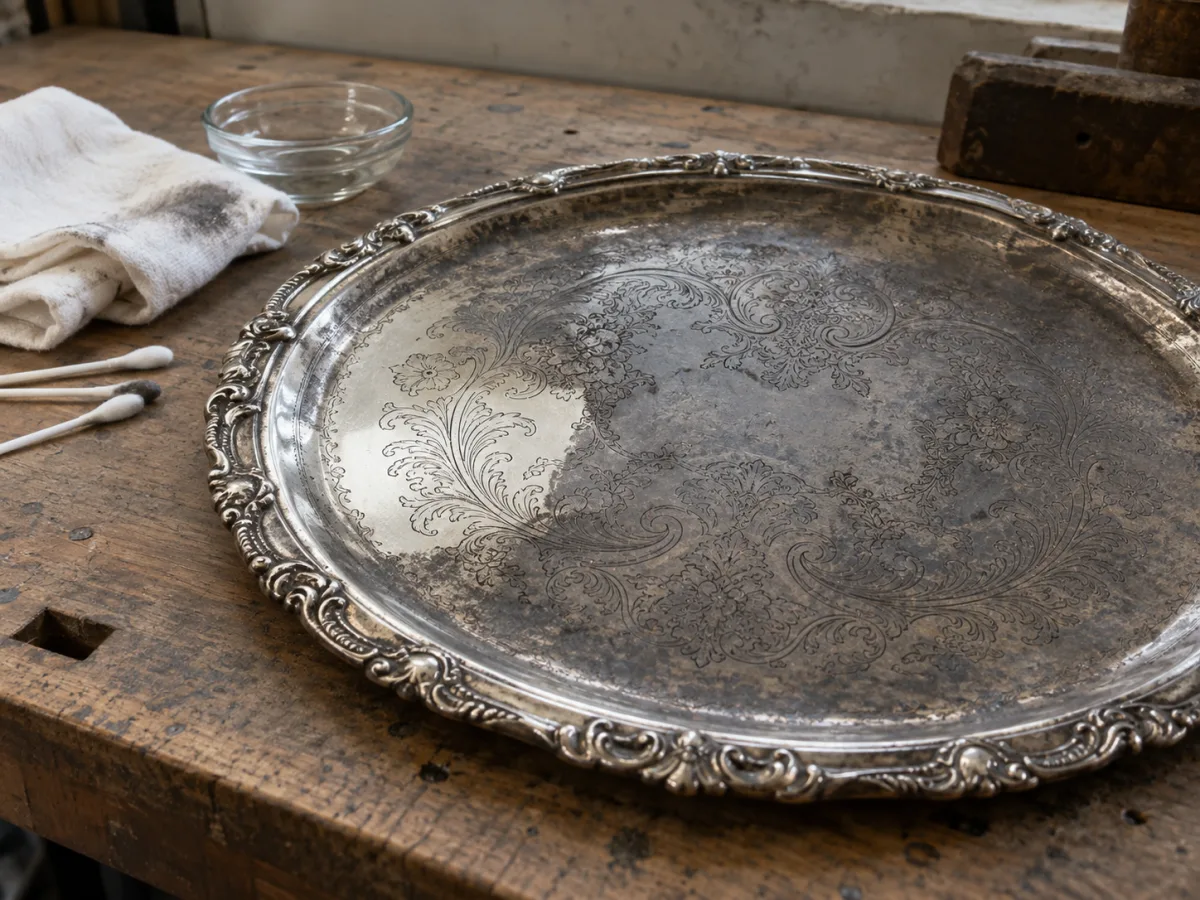
Grease and dirt are removed first, followed by tarnish treatment, hand work in recesses and a restrained final polish. Materials and tools are selected for each surface.

What to avoid at home

Scouring pads, abrasive powders and acidic cleaners can scratch metal or strip plate. If the alloy is uncertain or the object is antique, send a photograph before trying a new product.

Solid silver, sterling or silver plate

The material must be identified before cleaning. Marks such as 925 or Sterling may indicate sterling silver, while a plated object has a much thinner silver surface. Some objects also combine silver with wood, glass, fabric or filling inside hollow handles and feet.

This changes the safe treatment. A polish suitable for solid metal may expose the base metal on plate, while immersion can trap liquid inside hollow or composite parts. Hallmarks, worn edges, soldered joints and non-metal elements are therefore checked first.

What to avoid at home

Engraving, relief work and Judaica

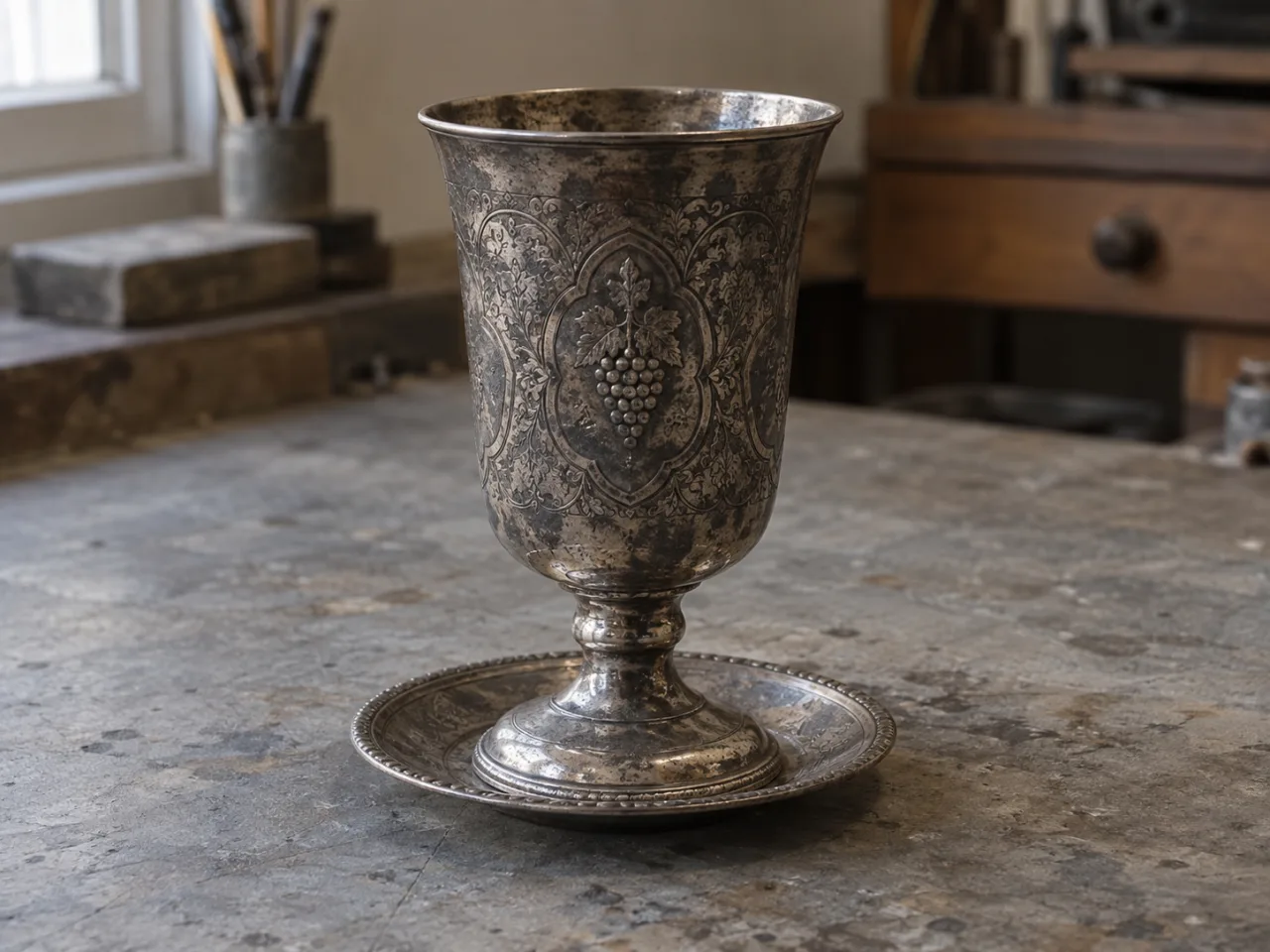
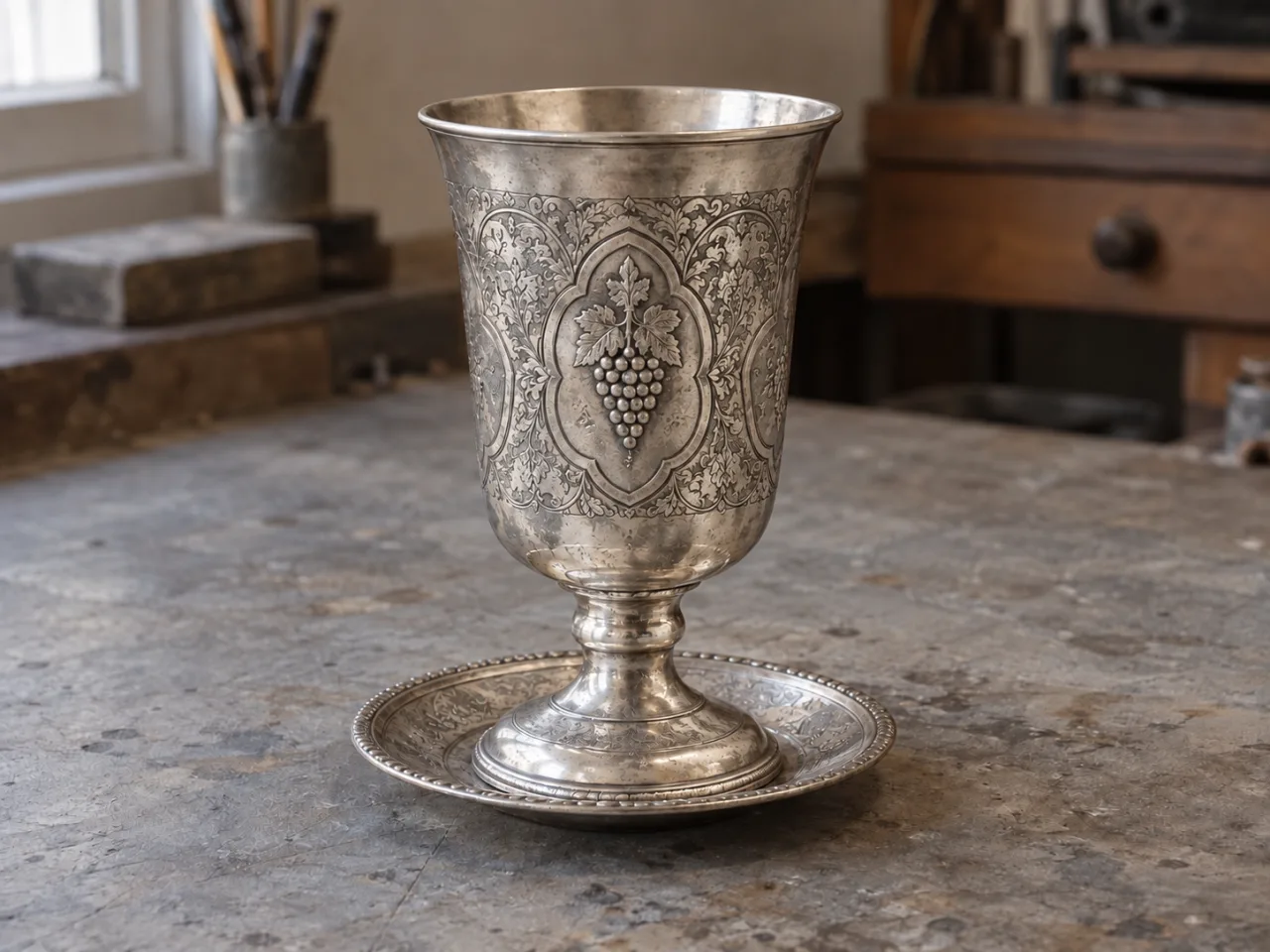
On candlesticks, menorahs, Kiddush cups, Torah finials and decorated trays, tarnish gathers in the deepest ornament. Removing every dark trace can make the design look flat and less legible.

Cleaning proceeds locally and in stages. Old residues are removed, open areas are treated and the remaining contrast is reviewed as work progresses. Hallmarks, dedications and makers’ marks are protected from aggressive polishing.

Keeping silver clean for longer

Handle cleaned silver with dry hands, remove dust with a soft cloth and store it in a dry cabinet. Humidity, rubber, newspaper, smoke and some foods release or trap compounds that accelerate tarnishing.

Objects that are not used regularly can be wrapped in acid-free tissue or a purpose-made anti-tarnish cloth inside a closed enclosure. Treating the first pale yellow or grey film gently can avoid more extensive polishing later.

A careful, staged process

FAQ


How is cleaning different from refinishing?

Cleaning removes dirt and tarnish. Refinishing is needed when scratches, wear or an uneven finish must also be corrected.

Can silver plate be cleaned safely?

Yes, after the condition and thickness of the plate have been assessed.

Will all dark colour be removed?

Not necessarily. Shading in antique ornament may be intentionally retained to preserve depth.

How can I get an estimate?

Send a full photo and close-ups of the tarnished areas on WhatsApp.

Will cleaning remove scratches and dents?

Cleaning removes dirt and tarnish but does not repair dents, breaks or deep scratches. Repair or refinishing can be added after inspection and a separate estimate.

How often should silver be cleaned?

There is no fixed schedule. Clean only when needed and use the gentlest appropriate method, because polishing removes a minute amount of surface metal. Dry, suitable storage extends the interval.

What clients say


Feedback on silver, brass and copper repair and restoration. More recommendations are available on the business pages on Google and Facebook.

I am very happy that I chose Nissa. From the first conversation it was clear that he is an honest, patient and reliable person, who provides personal and professional attention throughout the process. The work was performed to a very high standard, with precision, attention to every detail and a perfect finish. The final result exceeded all my expectations, and you can see that behind the work are years of experience, knowledge and a lot of love for the profession. There are not many professionals at this level, and I recommend him wholeheartedly to anyone looking for metal repair or restoration at the highest level.

בתאל אברג'ל Google review

Translated from the original Hebrew review

Professionalism, quality workmanship and the highest standard of work. Not to mention Nissim’s wonderful personality - he does everything pleasantly, with a smile and a love for people.

Iris Levit Facebook recommendation

Translated from the original Hebrew review

Screenshot of Iris Levit’s Facebook recommendation View original

I highly recommend the professional restoration services I received. A talented artist, with unique golden hands in our generation, specializes in restoring and repairing jewelry as well as sculpting and renovating statues. The jewelry was restored in an impressive and precise manner, with attention to every detail. Courteous, connoisseur and professional service - Yashar Koach!

Nehemia Katabi Google review

Translated from the original Hebrew review

About Nissim


Nissim Magnezi polishing a metal object in his workshop

Decades of professional experience

For decades I have devoted myself to bringing life and shine back to silver, brass and copper objects.

Many pieces have passed through families for generations. I know each one carries a story and memory, so I treat every job as if it belonged to my own family.

More about Nissim

Does your object need repair?


Send a photo on WhatsApp for an initial assessment, or call Nissim to discuss the work.