Silver repair by hand


Soldering, straightening, missing parts and reinforcement for silver and silver-plated objects.

Common damage to silver objects

A silver object that has broken, bent or lost a part is rarely beyond saving. Each piece is assessed individually and repaired with techniques suited to its metal, construction and age. Before any silver repair, the construction, hallmarks, plating and earlier joints are checked. This determines whether the object can be heated safely, whether parts must be removed first and how the repaired area should be finished without erasing its age or character.

How Nissim can help

  • Loose handles, feet and bases
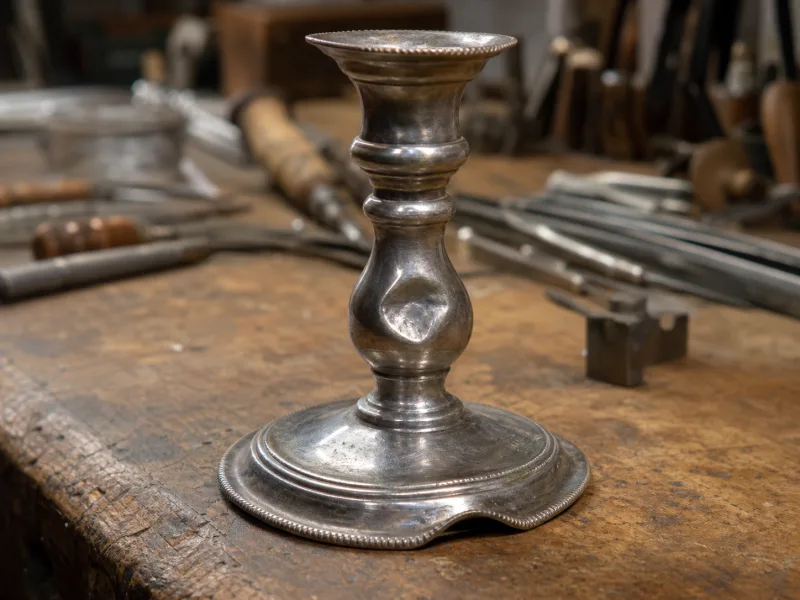
  • Dents in cups, jugs and trays
  • Bent candlesticks and menorah branches
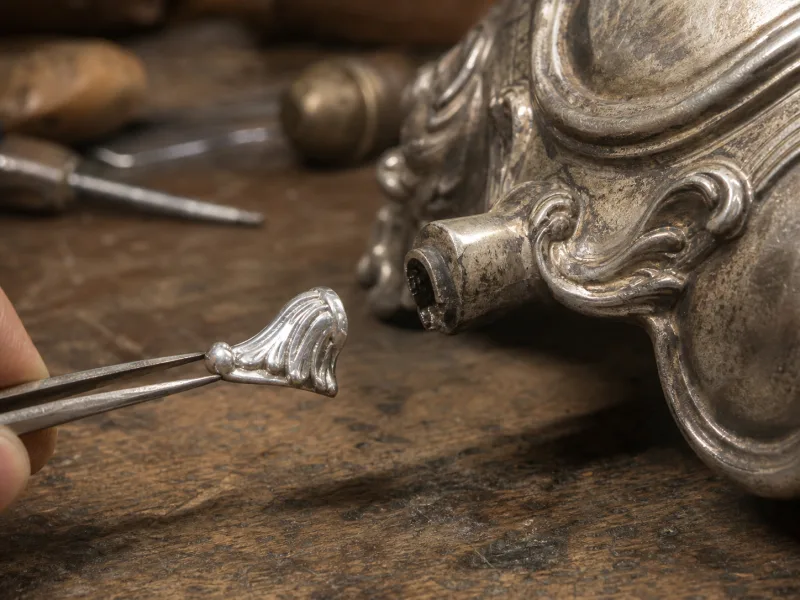
  • Missing decorative or structural parts

Common damage to silver objects

The weakest points are usually soldered joints: handles, feet, bases, hinges and decorative parts. Thin bodies also develop dents, distorted rims and cracks after years of use.

How the repair is carried out

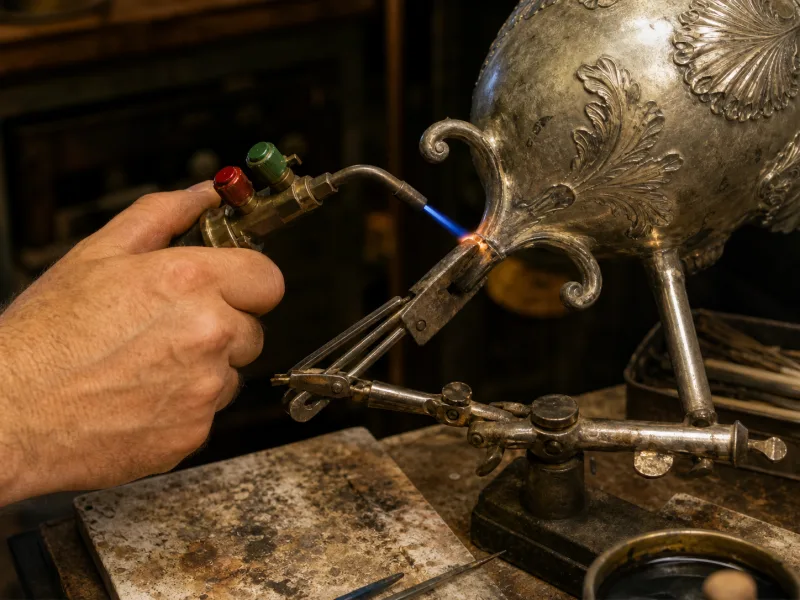
Metal repair is not gluing. The joint is cleaned, aligned and soldered with material selected for the alloy and colour. Heat is controlled carefully so nearby joints and decoration are not damaged.

Dents are raised gradually over shaped supports. Moving the metal a little at a time preserves the wall thickness and avoids creating a new crease or crack.

Replacing a missing part

A missing foot, handle, finial or branch can often be made by hand. When the object is symmetrical, an existing matching part provides the model for shape, scale and ornament.

How the repair is carried out

What determines the price

The price reflects time and complexity rather than the size of the object. A single clean joint is simpler than thin-wall dent removal, a handmade replacement or undoing an earlier adhesive repair. A clear photograph is usually enough for an initial estimate.

Solid silver, sterling silver and silver plate

The word silver can describe several constructions. Sterling silver is an alloy designed to be stronger than pure silver, while a silver-plated object has only a thin silver layer over another metal. Hollow handles and feet may also contain filling materials that react badly to heat.

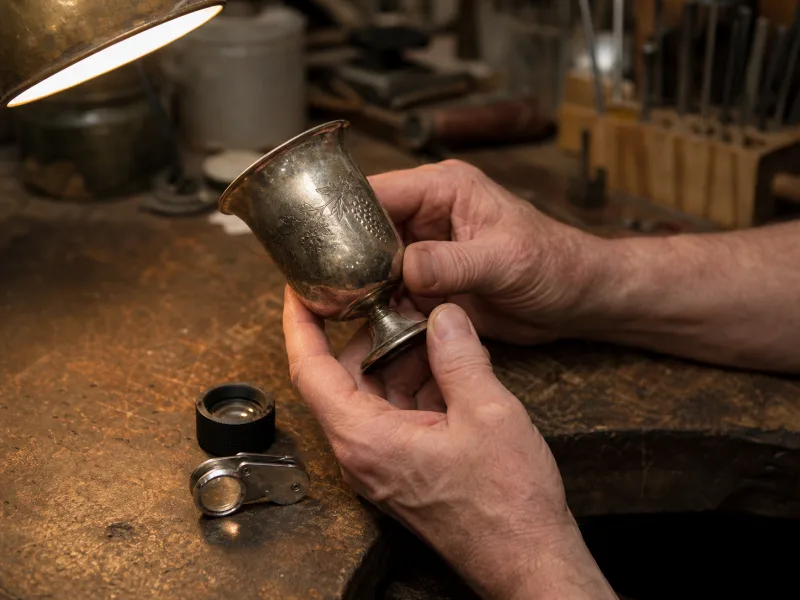
Hallmarks, worn edges and discreet surface clues help identify the object before soldering or polishing begins. A plated piece can often be repaired, but heat, cleaning and finishing must be limited so the surrounding coating is not lifted or polished through.

Replacing a missing part

Antique silver, Judaica and sentimental objects

Menorahs, Kiddush cups, Torah ornaments, candlesticks and inherited tableware often carry more personal value than market value. The aim is therefore not to make every surface look newly manufactured, but to restore strength and function while preserving engraving, dedications, hallmarks and appropriate patina.

Earlier repairs are documented and assessed rather than automatically removed. If a weak joint, adhesive residue or distorted replacement part affects the new work, the options are explained before proceeding. Clear photographs of the whole object and the damaged area usually allow an initial repair estimate.

Why glue and force make later repair harder

Household adhesive does not create a structural metal joint. It can fail again under weight or heat, and residue penetrates the gap that later needs to accept solder. Removing hardened glue without damaging a thin wall or decorative finish adds time and can make an otherwise simple repair more complicated.

Trying to bend silver back in one movement is also risky. Silver work-hardens as it is moved repeatedly, so a distorted rim, stem or branch can crack instead of returning to shape. Controlled straightening supports the original curve and moves the metal in small stages. Stop if the piece resists, creases or makes a new line, and send photographs before attempting another adjustment.

Loose parts should be kept together but not taped directly to the metal. Photograph the object before packing it, protect projecting elements separately and include every fragment, even if it appears too small to reuse.

What determines the price

FAQ


Can a completely broken silver object be repaired?

Usually yes. Detached parts can be soldered, and a missing part can often be made to match the original.

Will the solder line remain visible?

A well-finished joint is usually unobtrusive. The solder and final surface treatment are matched to the object.

Do you repair silver-plated items?

Yes. Extra care is needed because the underlying metal reacts differently and the silver layer may be thin.

Should I try glue first?

No. Adhesive does not form a structural metal joint and its residue makes a later professional repair more difficult.

What affects the cost of silver repair?

Cost depends mainly on complexity and time. A single accessible solder joint is usually simpler than straightening a thin wall, recreating a missing ornament or dismantling several connected parts. Previous adhesive or poor solder may also need to be removed first. A full photograph and close-ups are normally enough for an initial estimate.

Do you also repair brass and copper objects?

Yes. Brass and copper require different solders, temperatures and finishing methods, but detached handles, dents, cracks and missing parts can often be treated in much the same way after the metal is identified.

What clients say


Feedback on silver, brass and copper repair and restoration. More recommendations are available on the business pages on Google and Facebook.

I am very happy that I chose Nissa. From the first conversation it was clear that he is an honest, patient and reliable person, who provides personal and professional attention throughout the process. The work was performed to a very high standard, with precision, attention to every detail and a perfect finish. The final result exceeded all my expectations, and you can see that behind the work are years of experience, knowledge and a lot of love for the profession. There are not many professionals at this level, and I recommend him wholeheartedly to anyone looking for metal repair or restoration at the highest level.

בתאל אברג'ל Google review

Translated from the original Hebrew review

Professionalism, quality workmanship and the highest standard of work. Not to mention Nissim’s wonderful personality - he does everything pleasantly, with a smile and a love for people.

Iris Levit Facebook recommendation

Translated from the original Hebrew review

Screenshot of Iris Levit’s Facebook recommendation View original

I highly recommend the professional restoration services I received. A talented artist, with unique golden hands in our generation, specializes in restoring and repairing jewelry as well as sculpting and renovating statues. The jewelry was restored in an impressive and precise manner, with attention to every detail. Courteous, connoisseur and professional service - Yashar Koach!

Nehemia Katabi Google review

Translated from the original Hebrew review

About Nissim


Nissim Magnezi polishing a metal object in his workshop

Decades of professional experience

For decades I have devoted myself to bringing life and shine back to silver, brass and copper objects.

Many pieces have passed through families for generations. I know each one carries a story and memory, so I treat every job as if it belonged to my own family.

More about Nissim

Does your object need repair?


Send a photo on WhatsApp for an initial assessment, or call Nissim to discuss the work.